Senior Assistance Programs: 10 Ways to Save Beyond Medicare
 Senior assistance programs can help retirees reduce healthcare expenses, lower utility bills, save on groceries, and stretch retirement income further. While Medicare provides valuable health coverage, it isn’t the only resource available to older adults. Federal, state, and local senior assistance programs may provide financial help for healthcare, food, prescription drugs, housing, utilities, and other essential expenses. Many senior assistance programs are income-based, while others depend on age, disability status, or Medicare enrollment.
As living costs continue to rise, many older adults are looking for ways to make their retirement savings last longer. Fortunately, several government and nonprofit programs can help eligible seniors lower expenses and improve financial security. Unfortunately, many people never apply because they don’t realize these programs exist or assume they won’t qualify. If you’re retired, approaching retirement, or helping a loved one navigate benefits, here are 10 programs worth exploring.
Why Many Seniors Miss Out on Senior Assistance Programs
According to government agencies and nonprofit organizations, billions of dollars in assistance go unclaimed every year because eligible individuals never apply for available benefits (National Council on Aging, 2025). For example, eligibility requirements vary from one program to another. Some programs are based on income, while others consider resources, age, disability status, or Medicare enrollment.
Additionally, many people don’t realize they can qualify for more than one program at the same time. For example, someone enrolled in Medicare may also qualify for prescription drug assistance, food benefits, utility assistance, and help paying Medicare premiums. As a result, taking a few minutes to review available programs could result in significant savings throughout the year.

Senior Assistance Programs for Medicare Costs
One of the most valuable programs available to Medicare beneficiaries is the Medicare Savings Program. These state-administered programs help eligible individuals pay Medicare-related expenses, including premiums and, in some cases, deductibles and coinsurance (Centers for Medicare & Medicaid Services [CMS], 2025). The Qualified Medicare Beneficiary (QMB) Program is one of the most widely used Medicare Savings Programs. Depending on eligibility, QMB may help cover Medicare Part A and Part B costs.
Because income and resource limits can change annually and vary by state, beneficiaries should verify current eligibility requirements through their state’s Medicaid office. Ultimately, Medicare Savings Programs can save some seniors hundreds—or even thousands—of dollars each year. You may also want to read our guide to Medicare Savings Programs to learn how these benefits work and who may qualify.

Medicare Part D Extra Help
Prescription drug costs remain one of the largest healthcare expenses for many retirees. The Medicare Part D Extra Help program assists eligible beneficiaries with prescription drug expenses, including premiums, deductibles, and copayments (Social Security Administration, 2025). Additionally, many individuals who qualify for Medicare Savings Programs may also qualify for Extra Help.If prescription costs are straining your retirement budget, this is one of the first programs worth investigating. You may also want to review our Medicare Extra Help guide to understand potential savings opportunities.

Medicaid for Medicare Beneficiaries
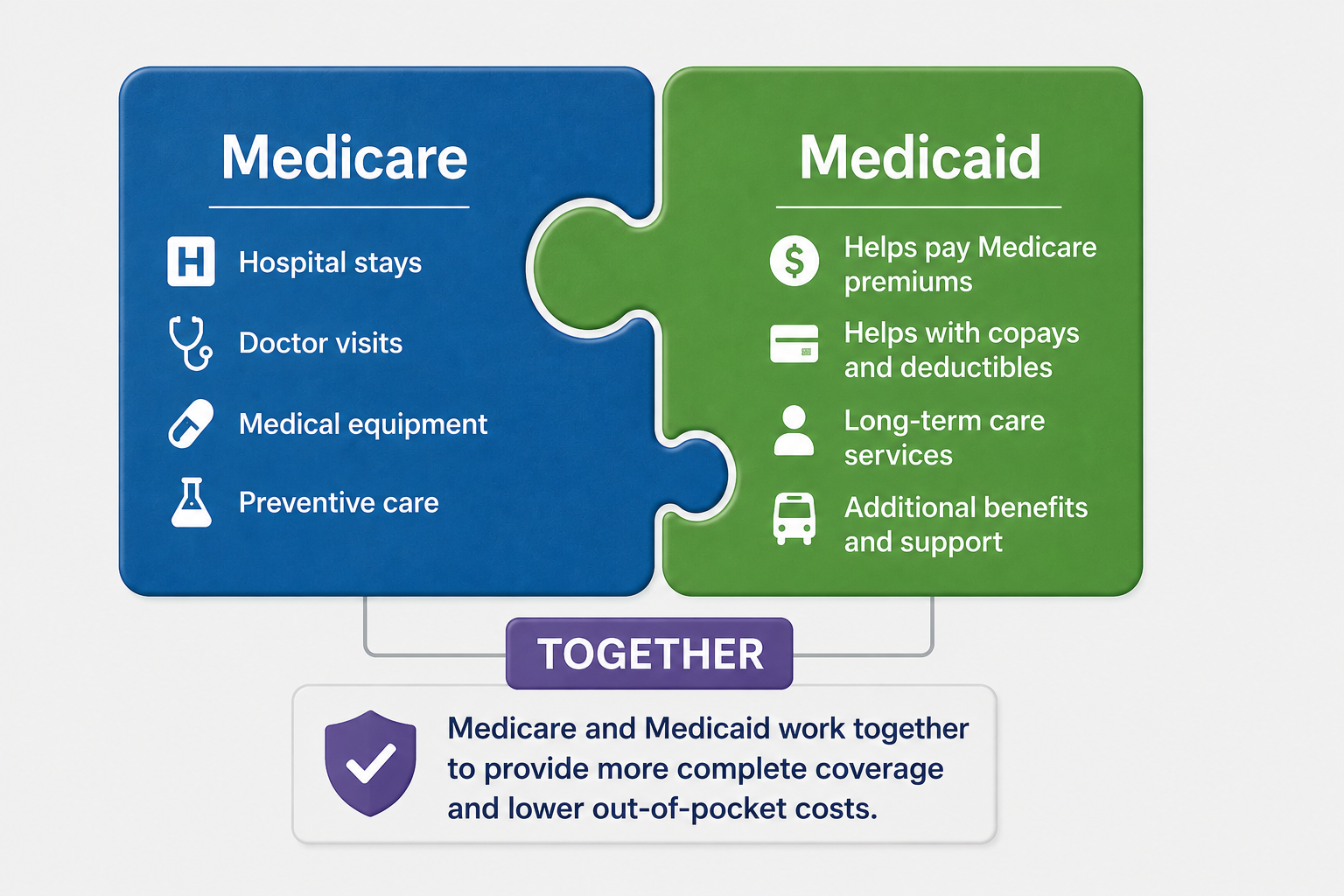
Some individuals qualify for both Medicare and Medicaid. These beneficiaries are often referred to as dual-eligible individuals. When someone qualifies for both programs, Medicaid may help cover expenses that Medicare does not fully pay, including premiums, copayments, and certain long-term care services (CMS, 2025). However, eligibility rules vary by state. For qualifying seniors, Medicaid can provide substantial financial assistance.
Senior Assistance Programs for Food Costs
The Supplemental Nutrition Assistance Program (SNAP) helps eligible households purchase groceries and maintain access to nutritious food (U.S. Department of Agriculture, 2025). However, many retirees mistakenly assume they earn too much to qualify. Several states also offer simplified application procedures for seniors. As grocery prices remain elevated, SNAP benefits can help stretch retirement dollars further and reduce financial stress. Eligibility depends on factors such as income, household size, and available resources.

Senior Farmers Market Nutrition Program
Fresh fruits and vegetables can become expensive for retirees living on fixed incomes. The Senior Farmers Market Nutrition Program provides eligible older adults with vouchers that can be used at participating farmers markets and roadside stands (U.S. Department of Agriculture, 2025). Additionally, the program supports both senior nutrition and local agriculture while helping retirees access healthy foods. As a result, availability varies by state and community.

Low Income Home Energy Assistance Program (LIHEAP)
Meanwhile, utility bills can place significant pressure on retirement budgets. The Low Income Home Energy Assistance Program (LIHEAP) helps eligible households pay heating and cooling expenses and may also provide emergency utility assistance (Administration for Children and Families, 2025).
Depending on the state and individual circumstances, assistance may include:
- Heating assistance
- Cooling assistance
- Emergency energy support
- Utility crisis intervention
- Home weatherization services
For seniors living on fixed incomes, LIHEAP can provide meaningful financial relief throughout the year.

Property Tax Relief Programs
Many states offer property tax assistance programs specifically designed for older homeowners. Depending on where you live, these programs may include:
- Property tax exemptions
- Tax credits
- Tax freezes
- Tax deferrals
Therefore, benefits vary significantly by state and local jurisdiction. Retirees should contact their local tax assessor’s office or state revenue department to learn about available opportunities. For many homeowners, property tax relief can result in substantial annual savings.

Prescription Assistance Programs
Furthermore, even with Medicare Part D coverage, some medications remain expensive. Many pharmaceutical manufacturers offer patient assistance programs that provide medications at reduced costs or, in some cases, at no cost to eligible individuals (Partnership for Prescription Assistance, 2025). In addition, several nonprofit organizations offer financial support for specific diseases and treatments. Individuals struggling with medication costs should speak with their healthcare provider or pharmacist about available resources. Understanding available senior assistance programs can help retirees maximize every dollar of their retirement income.

Area Agencies on Aging
Fortunately, every community has resources that many seniors never discover.
Area Agencies on Aging (AAAs) help connect older adults with local support services, including:
- Transportation assistance
- Meal delivery programs
- Caregiver support
- Housing resources
- Benefits counseling
- Wellness programs
These agencies often serve as an excellent starting point for seniors looking for financial assistance or community-based services (Administration for Community Living, 2025). Moreover, many programs are available at little or no cost.

State Pharmaceutical Assistance Programs
Some states operate prescription drug assistance programs specifically for older adults. These programs may help supplement Medicare Part D coverage and reduce out-of-pocket medication expenses (National Council on Aging, 2025). However, availability varies by state. For qualifying seniors, the savings can be meaningful. Therefore, checking with your state’s aging services department is a good place to start.

How a Local Broker Can Help You Find Senior Assistance Programs
A local broker can also help you evaluate whether your current Medicare Advantage, Medicare Supplement, or prescription drug plan still aligns with your healthcare needs and budget. Even small changes in premiums, copays, provider networks, or prescription drug coverage can have a significant financial impact over the course of a year. In addition, another advantage is local expertise. Medicare plans vary by ZIP code, and available benefits can differ from one county to another. A broker who works in your area may be familiar with local provider networks, plan options, and community resources that could help reduce healthcare expenses.
Many seniors find Medicare confusing, especially when comparing multiple plans and assistance programs at the same time. While a broker cannot determine eligibility for government assistance programs or guarantee savings, they can often point beneficiaries toward resources that may help lower healthcare costs and stretch retirement dollars further. If you’re reviewing your Medicare coverage this year, speaking with a trusted local Medicare broker may be one of the easiest ways to uncover savings opportunities you didn’t know existed.

The Bottom Line
Ultimately, Medicare is an important part of retirement planning, but it isn’t the only source of financial support available to older adults. Programs such as Medicare Savings Programs, Extra Help, Medicaid, SNAP, LIHEAP, prescription assistance programs, and local aging services may help eligible seniors reduce expenses and stretch retirement savings further. Additionally, many of these senior assistance programs can be combined, creating even greater opportunities for savings.
Because eligibility requirements vary by program, state, and personal circumstances, it’s worth reviewing available benefits annually. Reviewing senior assistance programs each year may help retirees uncover benefits they didn’t know existed. Many people are surprised by how much money senior assistance programs can save over time. A little research today could uncover assistance that saves you hundreds—or even thousands—of dollars each year. IN result you can live your days stress free to focus on what really matters.

Get 1-on-1 AssistanceClick Here


Learn More About Medicare
You may also find these Medicare guides helpful:
Follow us on:






IMPORTANT NOTE: This information is for educational purposes only and is not a complete description of benefits. This scenario is a hypothetical example based on common real-life situations and does not represent any specific individual. Benefits, premiums, and plan availability may vary by location and plan provider.. For more information, visit Medicare.gov or speak with a licensed insurance professionals.