Medicare Enrollment Checklist: What to Do Before Signing Up

Signing up for Medicare can feel confusing the first time you look at it. There are different parts, different timelines, and plenty of aggressive salespeople who make everything sound urgent. However, the truth is that enrollment is usually manageable when you break it into a few simple steps.
This Medicare enrollment checklist walks through the key things to review before enrolling so you can make a confident, informed decision. If you’re approaching age 65, using a Medicare enrollment checklist can help you avoid missed deadlines and better understand your coverage options.
1. Confirm Your Medicare Eligibility ✅
First, most people become eligible for Medicare at age 65. However, eligibility can happen earlier if you qualify due to certain disabilities or medical conditions.
Before enrolling, it is helpful to confirm the following details:
-
Your 65th birthday month
-
Whether you are already receiving Social Security benefits
-
Whether you qualifying coverage through an employer
If you are already receiving Social Security benefits, you may be automatically enrolled in Medicare Part A and Part B.

2. Know Your Medicare Enrollment Window✅
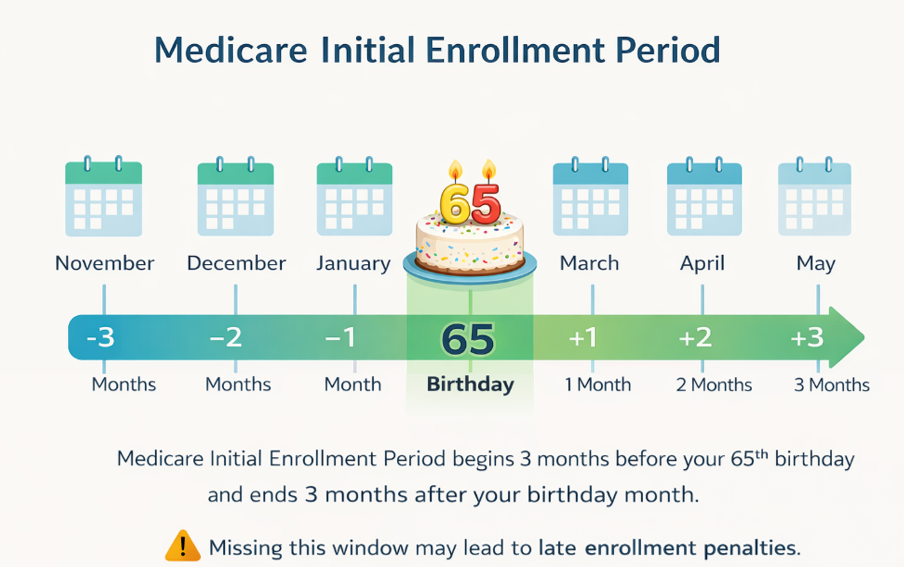
Your first opportunity to enroll is called the Initial Enrollment Period (IEP).
This enrollment window lasts seven months total:
-
3 months before your 65th birthday
-
Your birthday month
-
3 months after your birthday month
Because of this limited window, missing it could lead to late enrollment penalties or a temporary gap in coverage.
3. Understand the Parts of Medicare✅
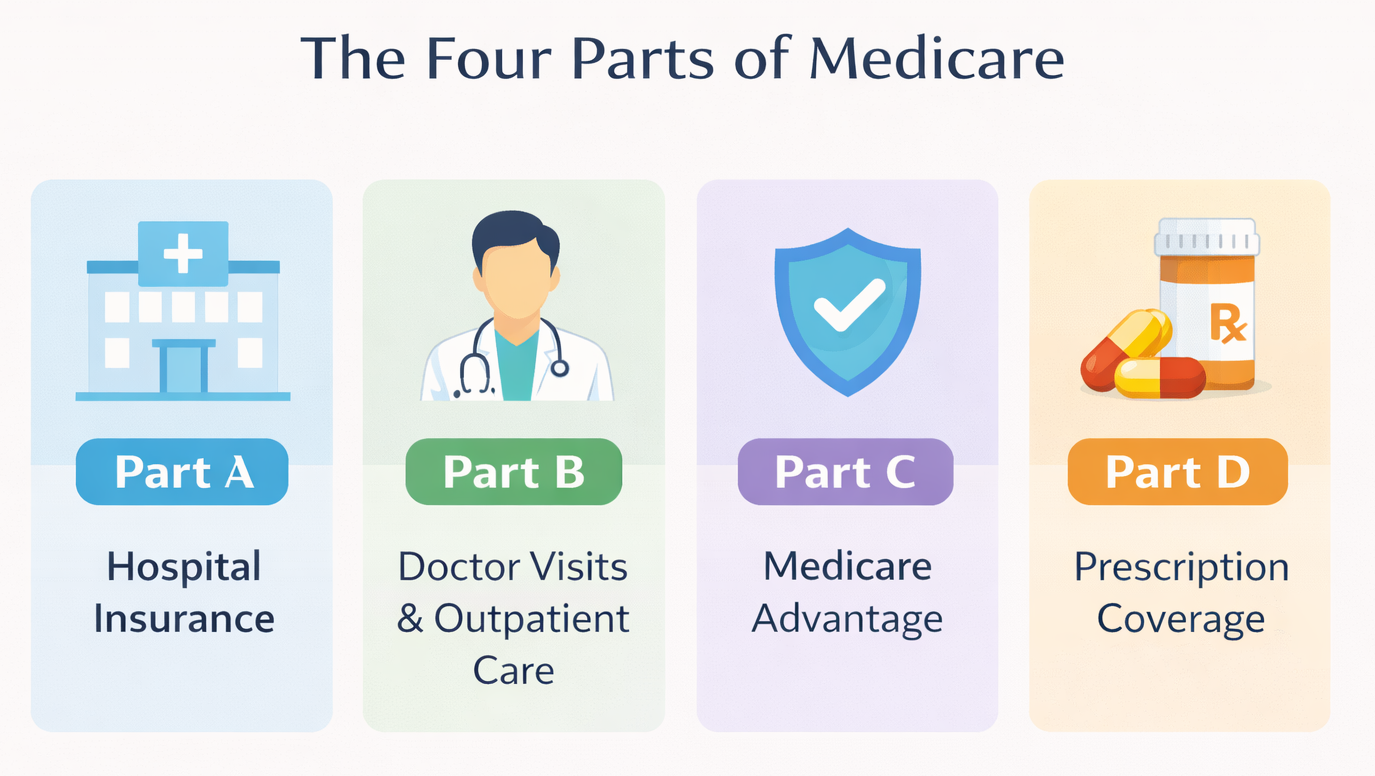
First, it helps to understand the basic pieces of Medicare before enrolling.
Part A — Hospital Insurance 🏥
Helps cover:
-
Inpatient hospital care
-
Skilled nursing facility care
-
Hospice care
-
Some home health services
Many people qualify for premium-free Part A if they or their spouse paid Medicare taxes long enough.
Part B — Medical Insurance 🧑⚕️
Helps cover:
-
Doctor visits
-
Preventive services
-
Outpatient care
-
Medical equipment
In addition, Part B has a monthly premium.
Part D — Prescription Drug Coverage 💊
Helps cover prescription medications. Plans are offered through private insurance companies approved by Medicare.
Medicare Advantage (Part C) 📋
On the other hand, an alternative way to receive Medicare benefits through private insurers that contract with Medicare.
4. Review Your Current Health Coverage✅
Before enrolling, take a close look at any health coverage you currently have. For example, consider asking yourself the following questions:
-
Do I have employer coverage through my or my spouse’s job?
-
Do I have retiree health benefits?
-
Will enrolling in Medicare affect my HSA eligibility?
In some cases, delaying Part B may make sense if you have creditable employer coverage.

5. Estimate Your Healthcare Needs✅
However, everyone’s situation is different. Because of this, it helps to think about your expected healthcare needs before choosing a plan.
Consider factors such as:
-
Prescription medications you take regularly
-
Preferred doctors and hospitals
-
Frequency of medical visits
-
Travel habits or living in multiple states
For example, these factors can help determine whether Original Medicare with supplemental coverage or a Medicare Advantage plan may better fit your needs.

6. Compare Coverage Options✅
Once you understand your needs, review the available coverage structures.
Common options include:
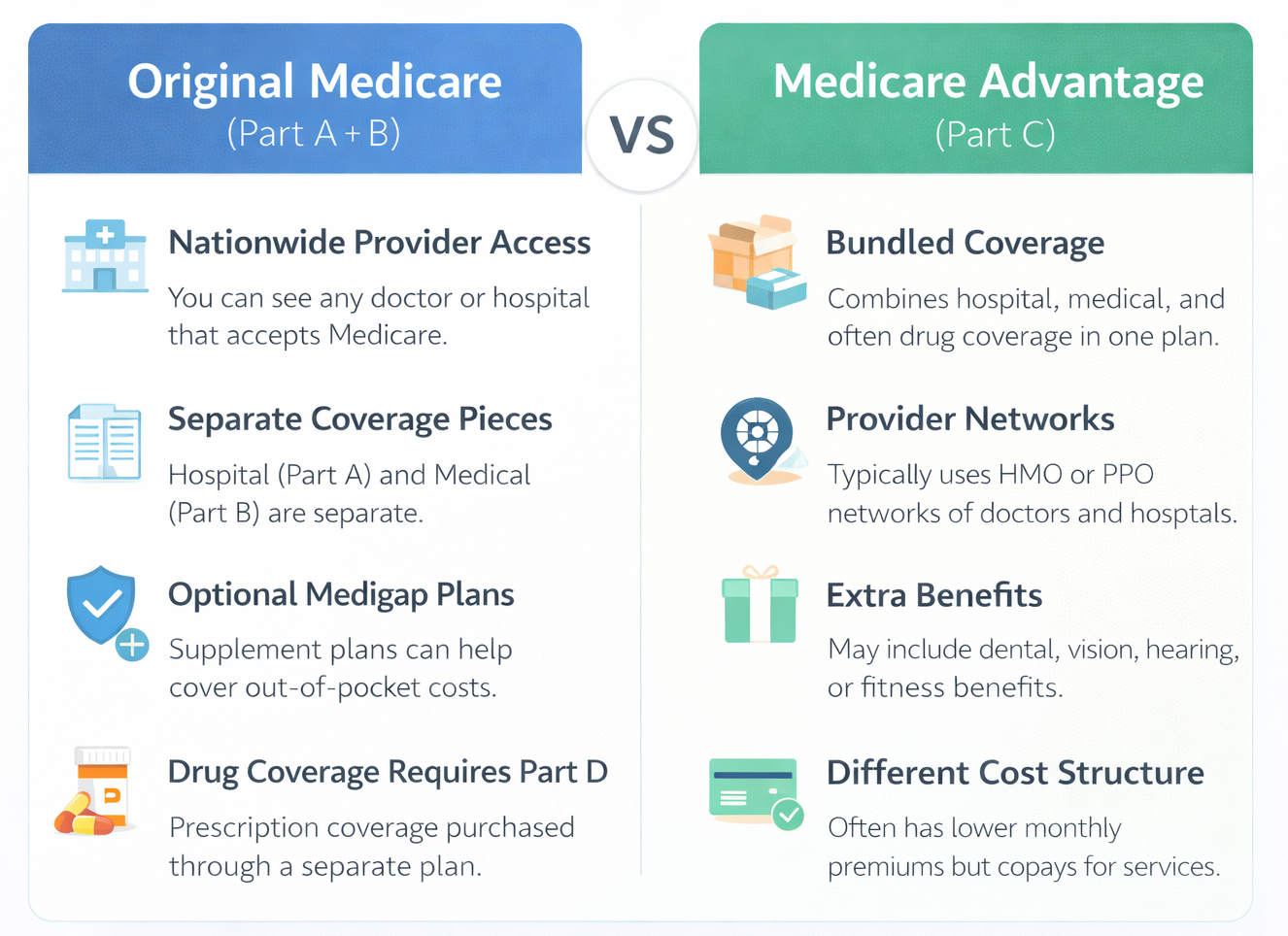
Original Medicare (Part A + Part B)
You may also add:
-
A Medicare Supplement (Medigap) policy
-
A Part D prescription drug plan
Medicare Advantage (Part C)
Typically combines:
-
Hospital coverage
-
Medical coverage
-
Often prescription drug coverage
However, plans vary by location and provider networks.
7. Check Prescription Drug Coverage✅
If you take medications regularly, it is important to confirm:
-
Your prescriptions are covered by the plan formulary
-
Your pharmacy is in-network
-
Estimated monthly medication costs
Additionally, even if you do not currently take prescriptions, enrolling in a Part D plan when first eligible can help avoid potential late enrollment penalties later.

8. Prepare the Information You May Need to Enroll✅
Having documents ready can make enrollment smoother.
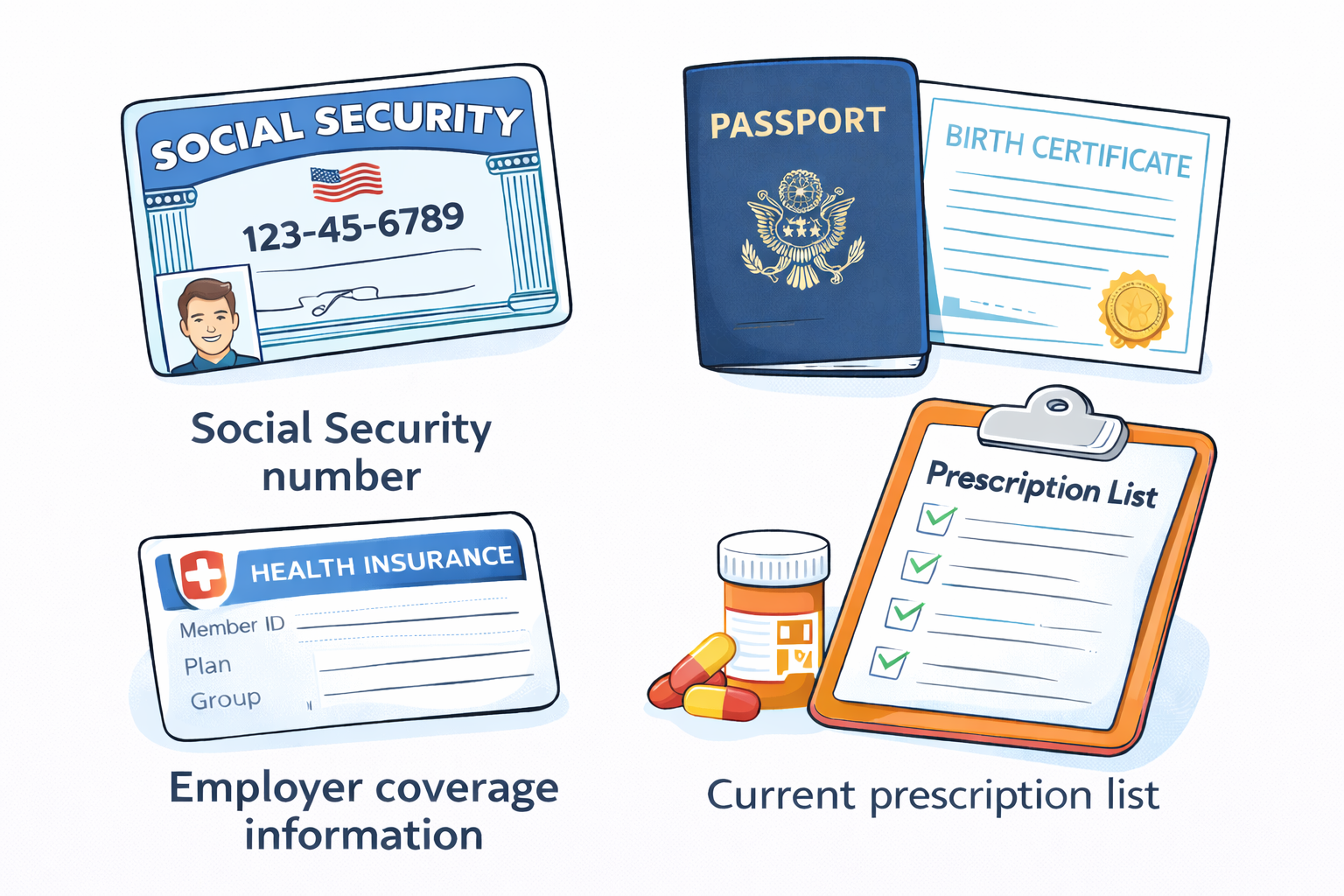
Common information includes:
-
Social Security number
-
Proof of age or citizenship
-
Employer coverage information (if applicable)
-
Current prescription list
In many cases enrollment can be completed through Social Security, online, by phone, or in person.
9. Review Plan Details Carefully✅
Before enrolling in any plan, review:
-
Monthly premiums
-
Deductibles and copays
-
Provider networks
-
Drug formularies
-
Out-of-pocket limits
Plan benefits and costs can change each year, so reviewing the details annually is important.

10. Keep Important Medicare Dates in Mind✅
Beyond your initial enrollment period, other key windows include:
Annual Enrollment Period (AEP)
October 15 – December 7
You can switch Medicare Advantage or Part D plans during this time.
Medicare Advantage Open Enrollment
January 1 – March 31
Allows certain changes for those already enrolled in a Medicare Advantage plan.
You are not permanently locked into a plan. Additionally, if you do not like the plan you are on, you can review other options during the next open enrollment period at no additional cost.

Final Thoughts
Fortunately, Medicare enrollment does not have to be overwhelming. Therefore, taking the time to review your eligibility, coverage options, and healthcare needs can make the process much smoother.
Additionally, using a checklist like this can help you stay organized and avoid missing important deadlines or coverage details.
If you are approaching Medicare eligibility, starting early gives you time to compare options and choose coverage that fits your situation. For example, starting your research a few months before your 65th birthday gives you time to review plan options, compare coverage, and avoid missing important Medicare enrollment deadlines.
Finally, it is helpful to review your Medicare coverage each year. For example, plan costs, provider networks, and prescription drug coverage can change over time. Because of this, taking a few minutes during the Annual Enrollment Period to review your options can help ensure your plan continues to meet your healthcare needs. As a result, reviewing your coverage annually can help you avoid unexpected costs or coverage changes.
Medicare Enrollment Checklist
⏹️ Confirm Your Medicare Eligibility
⏹️ Know Your Medicare Enrollment Window
⏹️ Understand the Parts of Medicare
⏹️ Review Your Current Health Coverage
⏹️ Estimate Your Healthcare Needs
⏹️ Compare Coverage Options
⏹️ Check Prescription Drug Coverage
⏹️ Prepare the Information You May Need to Enroll
⏹️ Review Plan Details Carefully
⏹️ Keep Important Medicare Dates in Mind
Get 1-on-1 AssistanceClick Here


Follow us on: