Medicare Enrollment Penalties: A $10,000 Retirement Mistake

Medicare enrollment penalties are one of the most overlooked retirement planning mistakes. Many Americans focus on saving for retirement but don’t realize that missing certain Medicare enrollment deadlines can lead to higher healthcare costs for years. Understanding how these penalties work can help retirees avoid unnecessary expenses and protect their retirement income.
Most people spend years preparing for retirement. They build savings, plan for Social Security, and think about how much income they’ll need. However, many overlook one important detail: Medicare enrollment.
Missing a Medicare enrollment deadline can become an expensive mistake. In some cases, enrolling late can lead to higher monthly premiums that last for years. Over time, those extra costs can add up to thousands of dollars and put unnecessary pressure on a retirement budget.
Why People Miss Medicare Enrollment Deadlines
Many people don’t miss Medicare deadlines on purpose. Some assume Medicare enrollment happens automatically. Others believe they can sign up whenever they choose. Many people who continue working after age 65 aren’t sure how their employer health insurance affects Medicare rules. Because Medicare has specific enrollment windows, even a simple misunderstanding can result in higher costs later.

What Is the Medicare Initial Enrollment Period?
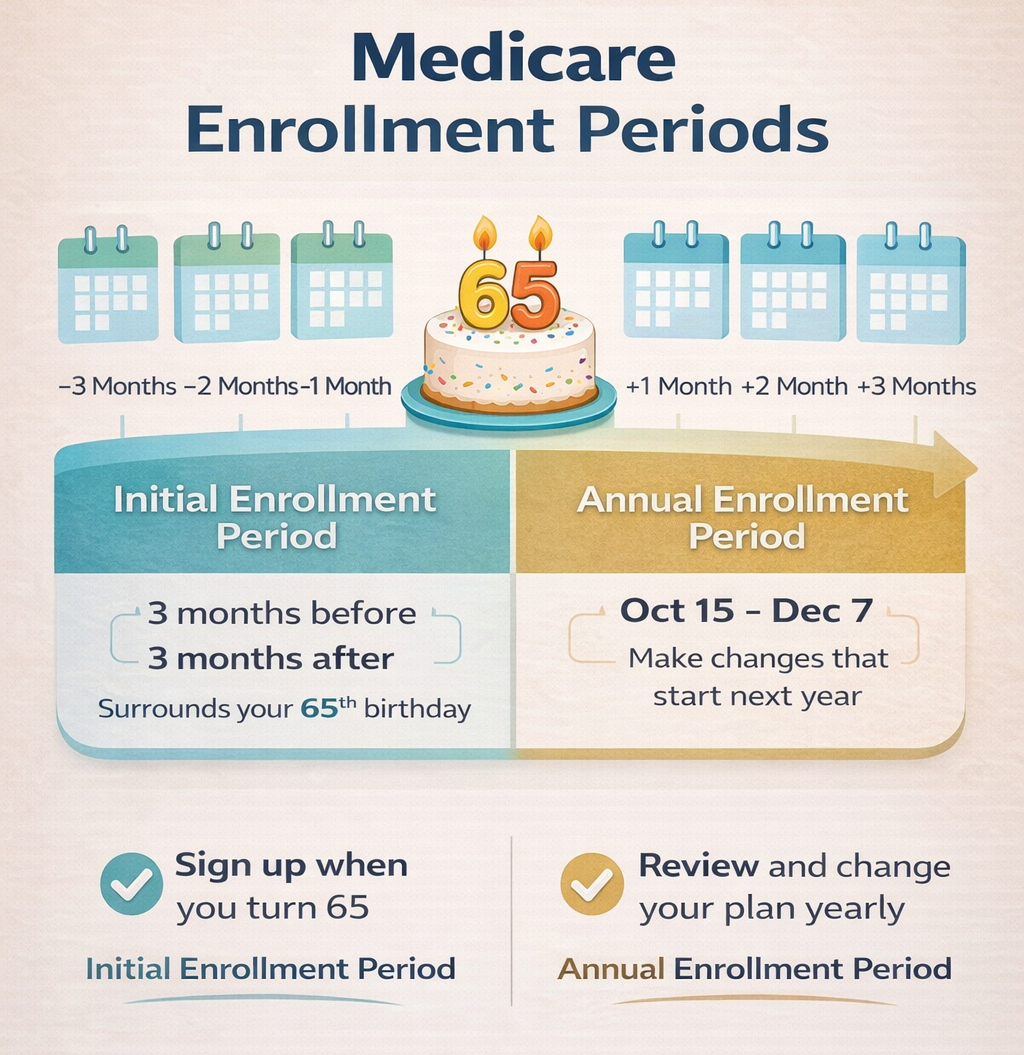
For most Americans, Medicare eligibility begins at age 65. At that point, Medicare gives individuals a seven-month Initial Enrollment Period. This enrollment window begins three months before your 65th birthday month, includes your birthday month, and ends three months afterward. For many people, this is the easiest time to enroll in Medicare coverage. Missing this window doesn’t automatically mean you’ll face penalties, but it can create additional challenges if you don’t qualify for an exception.
Understanding the Medicare Part B Penalty
One of the most common Medicare penalties involves Medicare Part B. Part B helps cover doctor visits, outpatient care, preventive services, and other medical expenses. If you delay enrollment and don’t qualify for an exception, Medicare may increase your monthly premium by 10% for every full 12-month period that you were eligible but not enrolled. Unlike a one-time fee, this increase often stays with you for as long as you keep Part B coverage. That’s why many retirement experts encourage people to understand Medicare deadlines well before turning 65.

How a Medicare Late Enrollment Penalty Can Cost Thousands
A Medicare late enrollment penalty may not seem significant at first. However, the long-term costs can surprise many retirees. Consider a person who becomes eligible for Medicare at age 65 but waits until age 68 to enroll without qualifying for a special enrollment exception. Because three full years passed, Medicare could apply a 30% Part B penalty. Using a monthly premium example of $241.89, a 30% increase would raise the monthly premium to approximately $314.46. That’s an additional $72.57 each month.
Over one year, that extra amount adds up to roughly $870. Over 12 years, the total additional cost could exceed $10,000. Actual Medicare premiums change over time, and every person’s situation is different, but this example shows how a delayed enrollment decision can create lasting expenses. Many retirees underestimate how Medicare enrollment penalties can affect their long-term healthcare costs.

Don’t Forget About Medicare Part D
Many people focus on Medicare Part B and overlook Medicare Part D, which helps cover prescription drugs. If you go without qualifying prescription drug coverage after becoming eligible for Medicare, you may face a Medicare Part D late enrollment penalty. This penalty can increase your prescription drug costs and continue for an extended period. Before delaying enrollment, make sure you understand how your current prescription coverage fits into Medicare’s rules.

Exceptions That May Help You Avoid Medicare Enrollment Penalties
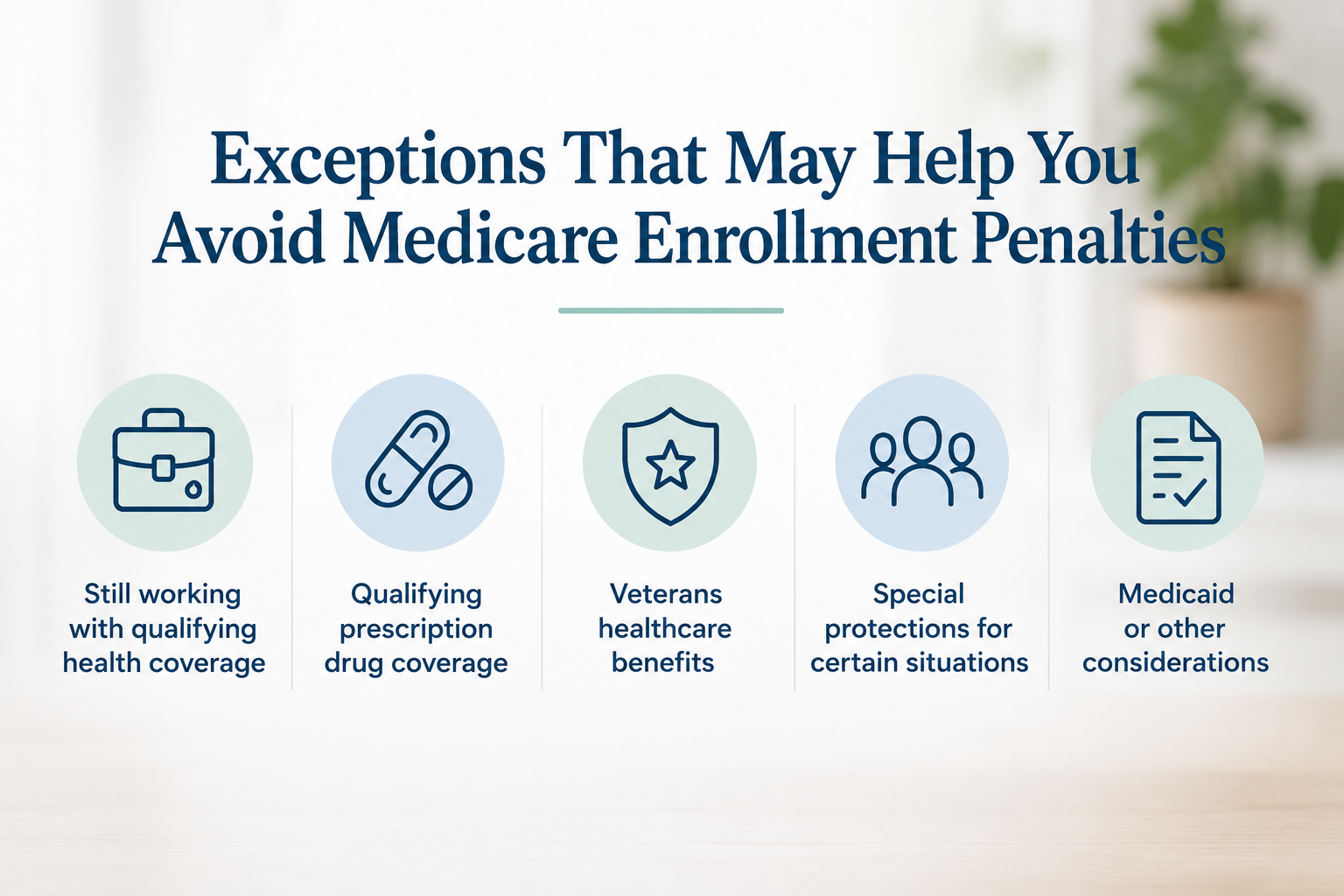
The good news is that not everyone who delays Medicare enrollment pays a penalty. Several exceptions allow eligible individuals to postpone enrollment without additional costs. Understanding the available exceptions can help eligible individuals avoid Medicare enrollment penalties. For example, if you continue working after age 65 and receive qualifying health insurance through an employer, you may delay Medicare enrollment without a penalty. People with qualifying prescription drug coverage may also avoid Medicare Part D penalties.
Veterans who receive healthcare benefits through the Department of Veterans Affairs may have different Medicare considerations. Medicaid recipients and people facing certain qualifying circumstances may also have access to special protections. Because Medicare rules can vary based on individual situations, reviewing your options before making enrollment decisions is important.
What Is Creditable Coverage?
One Medicare term that often causes confusion is “creditable coverage.” In general, creditable coverage refers to health or prescription drug coverage that Medicare considers comparable to its standard coverage. If you have qualifying coverage, Medicare may allow you to delay enrollment without imposing a late enrollment penalty. Because coverage requirements vary, it’s important to review your plan details carefully and keep any records that show your coverage qualifies.

What Happens If You Miss Your Medicare Enrollment Window?
If you miss your Initial Enrollment Period, you may still have options. Medicare offers a General Enrollment Period that typically runs from January 1 through March 31 each year. During this period, eligible individuals can enroll in Medicare coverage if they missed their original enrollment window. While penalties may still apply in some situations, enrolling as soon as possible can help prevent additional delays and future complications. Acting quickly after missing a deadline may help reduce the impact of Medicare enrollment penalties.

Why Medicare Planning Is an Important Part of Retirement Planning
Healthcare often becomes one of the largest expenses retirees face. That’s why Medicare planning deserves the same attention as investments, savings accounts, and Social Security benefits. A missed Medicare deadline may seem like a small issue today, but the financial impact can grow over time. Understanding your enrollment options now can help you avoid unnecessary costs later.

How to Avoid Medicare Enrollment Penalties
The best way to avoid a Medicare late enrollment penalty is to understand your enrollment window before you become eligible. Learn when your Initial Enrollment Period begins, review your current health insurance coverage, and determine whether any exceptions apply to your situation. If you miss your first opportunity to enroll, don’t ignore the issue. Review your options during the Medicare General Enrollment Period and take action as soon as possible. A little planning today can help protect your retirement income and potentially save thousands of dollars in future healthcare costs.

How a Local Medicare Expert Can Help Prevent a $10,000 Retirement Mistake
This show why having guidance matters. A local Medicare broker doesn’t just help you once. They continuously help you understand how Medicare actually works in real life.
That includes situations like:
- Unexpected bills
- Confusing charges
- Questions about coverage
- Concerns about possible Medicare billing errors
They can walk you through what might be happening and help you figure out your next steps. Sometimes, just having someone who understands the system can make a stressful situation feel manageable.

Final Thoughts
Many retirees spend years building financial security, yet a missed Medicare enrollment deadline can quietly increase healthcare costs for years to come. While some people qualify for exceptions that allow them to delay enrollment without penalties, others may face higher premiums that continue throughout retirement.
Learning about Medicare enrollment penalties before you turn 65 can help you make informed decisions and avoid unnecessary expenses during retirement. By understanding Medicare enrollment deadlines, learning about available exceptions, and taking action when needed, you can avoid one of the most common retirement planning mistakes.

Get 1-on-1 AssistanceClick Here


Learn More About Medicare
You may also find these Medicare guides helpful:
Follow us on:






IMPORTANT NOTE: This information is for educational purposes only and is not a complete description of benefits. This scenario is a hypothetical example based on common real-life situations and does not represent any specific individual. Benefits, premiums, and plan availability may vary by location and plan provider.. For more information, visit Medicare.gov or speak with a licensed insurance professionals.