Original Medicare: What It Covers and How It Works
 When people first enroll in Original Medicare, one of the most common questions is what it actually covers and how it works in real life. Many people assume Medicare will take care of most healthcare costs once they sign up. In reality, while it covers a lot of important services, it does not cover everything. That’s where some confusion usually starts.
If you’ve been trying to understand how this coverage works and what to expect, you’re not alone. Once you break it down into simple parts, it becomes much easier to see how it fits into your overall healthcare plan.
What Original Medicare Actually Is
This is the federal health insurance program provided by the government. It includes two main parts: Part A and Part B. Part A focuses on hospital-related care, while Part B covers medical services like doctor visits and outpatient care. Together, these two parts form the foundation of your Medicare coverage. Unlike private plans, the federal government manages this program directly.
 What Part A Covers
Part A helps cover care related to hospital stays and facility-based services. This includes inpatient hospital stays, skilled nursing facility care after a hospital stay, hospice care, and limited home health services. Even though these services are covered, you still share in the costs. Deductibles and other out-of-pocket expenses may apply depending on your situation. Many people qualify for premium-free Part A, but that does not mean care comes at no cost.

What Original Medicare Part B Covers
Part B focuses on everyday medical care and outpatient services. This includes doctor visits, preventive services, lab work, outpatient procedures, and certain medical equipment. It plays an important role in helping people manage their health on an ongoing basis, not just during hospital stays. Part B has a monthly premium, and you will usually pay a deductible along with a percentage of the cost for services.
 How Original Medicare Works Day to Day?
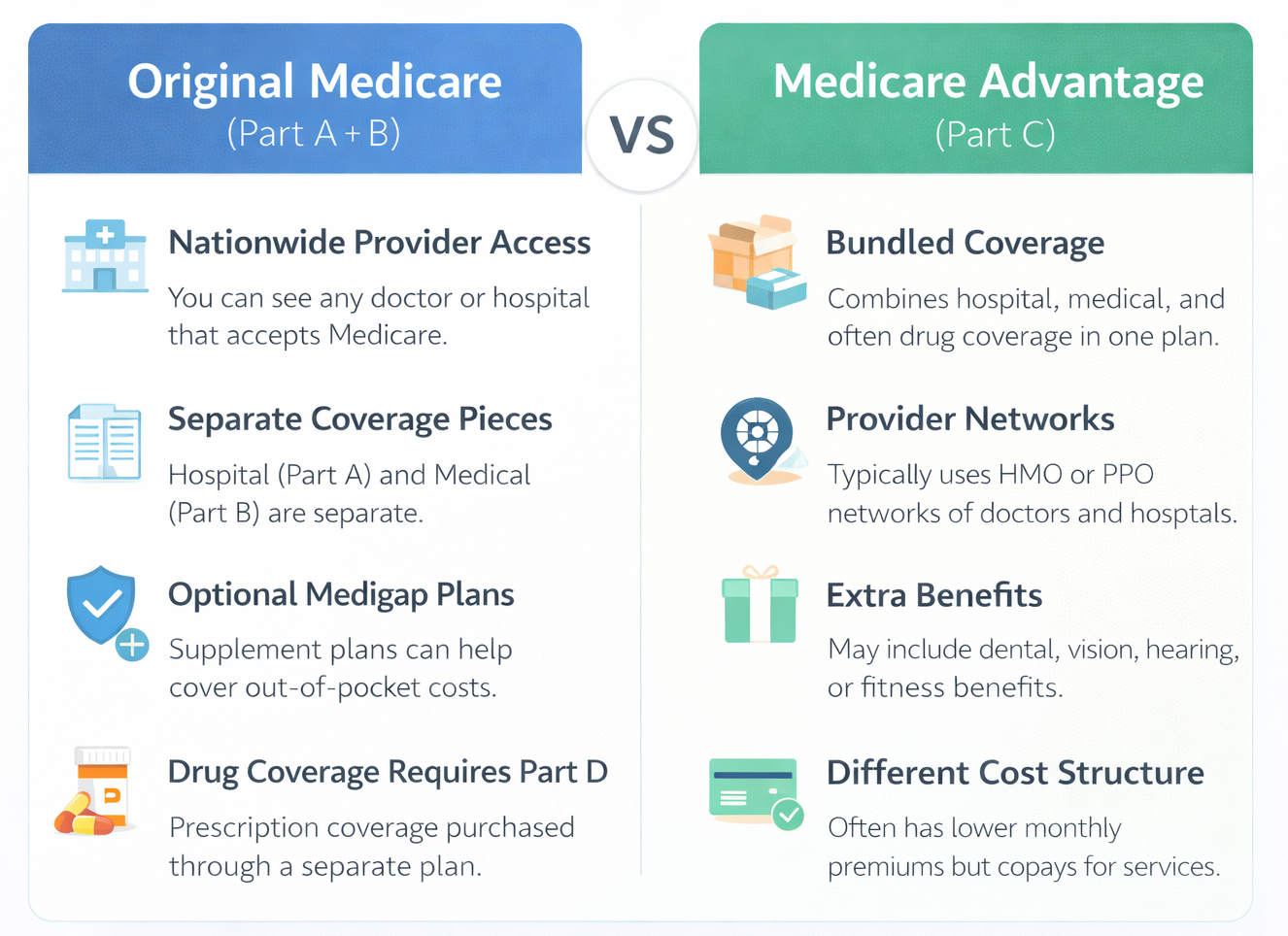
One of the biggest advantages of this coverage is flexibility. You can visit most doctors and hospitals in the United States that accept Medicare. You don’t need to stay within a network or get referrals in most cases. That level of access gives you more control over your care. At the same time, you pay your share as you use services. This typically includes deductibles and coinsurance. Understanding that balance helps you see how everything works in real life.

What Original Medicare Does Not Cover?
This is where many people feel caught off guard. This coverage does not include everything. It generally does not cover routine dental care, vision exams for glasses, hearing aids, or most prescription drugs. It also does not include an out-of-pocket maximum for covered services. Because of these gaps, many people explore additional coverage options.

Why Some People Choose This Coverage?
Many people stick with this option because of its flexibility. They like knowing they can see providers nationwide without worrying about networks. Others prefer the straightforward structure. Medicare pays its portion, and they handle the rest. However this behavior is risky because no one can predict unexpected healthcare costs.

Why Others Add Additional Coverage?
At the same time, many people choose not to rely on this coverage alone. The main concern is cost exposure. Without a cap on out-of-pocket spending, expenses can add up. Some people choose Medicare Supplement plans to help cover those gaps. Others enroll in a Part D plan to add prescription drug coverage. These options are not required, but they are very common.

How It Compares to Medicare Advantage?
This is one of the most common comparisons people make. Original Medicare allows you to access care nationwide without network restrictions. Medicare Advantage plans are offered by private companies and usually include networks and bundled coverage. Neither option is automatically better. They simply work differently.
 When You Can Enroll?
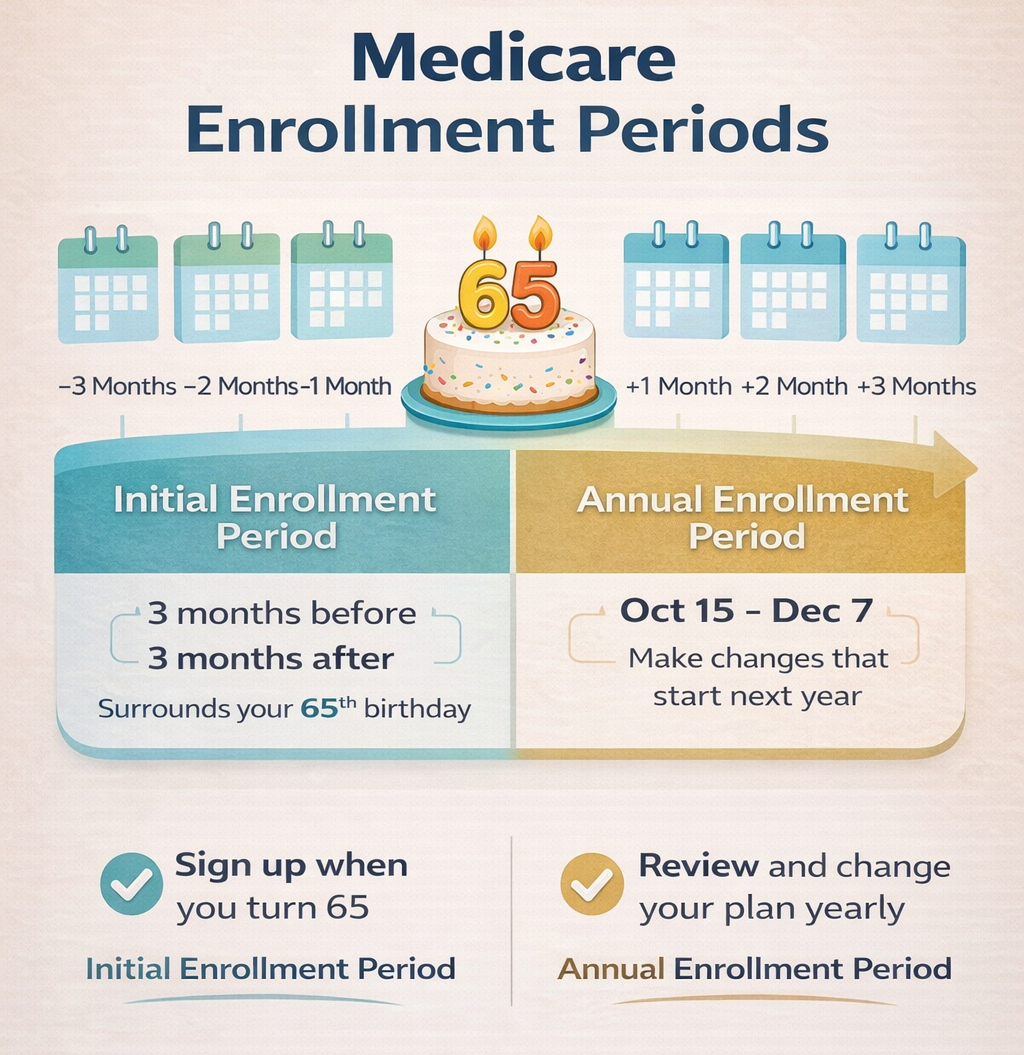
Most people first enroll during their Initial Enrollment Period when they become eligible for Medicare. There is also an Annual Enrollment Period from October 15 through December 7 each year. During this time, you can join, switch, or leave a plan. Other enrollment opportunities may apply depending on your situation. Understanding your timing helps you avoid penalties and gaps in coverage.
Why Reviewing Your Coverage Matters?
Even if your coverage works well now, things can change. Your healthcare needs may shift, and your preferences may change over time. You might decide to add drug coverage or explore additional protection later. Reviewing your options periodically helps make sure everything still fits your situation.

Talking Through Your Options Can Help
At some point, many people want to make sure they’re looking at things the right way. Not because they feel pressured, but because they want clarity. A local Medicare broker can help explain how everything works and walk through available options in your area. That kind of conversation often makes things feel much more manageable.
 Final Thoughts
Original Medicare is the foundation of Medicare coverage. It offers flexibility, broad access to providers, and a consistent structure. At the same time, it does not cover everything. Without a cap on out-of-pocket spending, expenses can add up. Understanding this is very important. Once you understand how it works, you can make more confident decisions about your coverage. Better coverage and health allows for you to spend more quality time with the ones you love.

Get 1-on-1 AssistanceClick Here


Learn More About Medicare
You may also find these Medicare guides helpful:
Follow us on:






IMPORTANT NOTE: This information is for educational purposes only and is not a complete description of benefits. Benefits, premiums, and plan availability may vary by location and plan provider. For more information, visit Medicare.gov or speak with a licensed insurance professionals.