Medicare Enrollment Periods: Important Deadlines and Timelines
 Understanding Medicare enrollment periods is an important part of planning your healthcare coverage. Many people are surprised to learn that Medicare enrollment periods are tied to specific deadlines.
Because of this, missing an enrollment window may affect when your coverage begins. In some cases, it may also lead to late enrollment penalties or delays in coverage.
The good news is that understanding how the Medicare timeline works can help you avoid these issues.
Let’s walk through the main Medicare enrollment periods and what may happen if you miss one.
Understanding the Main Medicare Enrollment Periods
Medicare has several enrollment periods throughout the year. Each one serves a different purpose and applies to different situations.
The most common enrollment periods include:
-
Initial Enrollment Period (IEP)
-
General Enrollment Period (GEP)
-
Annual Enrollment Period (AEP)
-
Special Enrollment Period (SEP)
Knowing how these timelines work can help you enroll in Medicare at the right time.

Initial Enrollment Period (IEP)
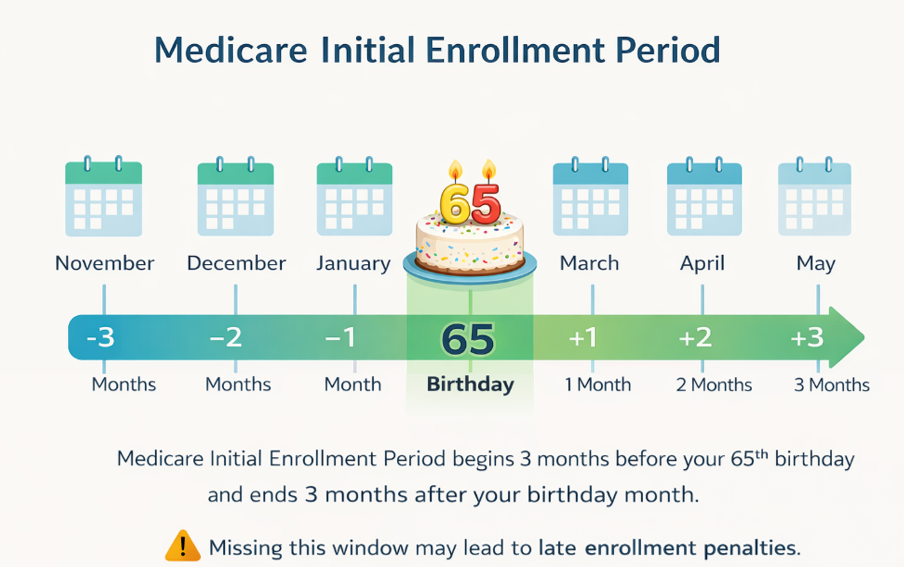
For most people, the first opportunity to enroll in Medicare is the Initial Enrollment Period, often called the IEP.
This enrollment window lasts seven months.
It includes:
-
The three months before your 65th birthday
-
The month of your 65th birthday
-
The three months after your birthday month
During this time, individuals can enroll in:
-
Medicare Part A
-
Medicare Part B
-
Medicare Advantage plans
-
Medicare Part D prescription drug plans
-
Medicare Supplement plans
Enrolling during your Initial Enrollment Period may help ensure that your Medicare coverage begins without delays.
What Happens If You Miss Your Initial Enrollment Period?
If you do not enroll in Medicare during your Initial Enrollment Period, you may need to wait for another enrollment opportunity.
In many cases, this means waiting until the General Enrollment Period.
In addition, depending on your situation, you may face late enrollment penalties, particularly for Medicare Part B or Medicare Part D.
These penalties can increase your monthly premium and may remain in place for as long as you have that coverage.

General Enrollment Period (GEP)
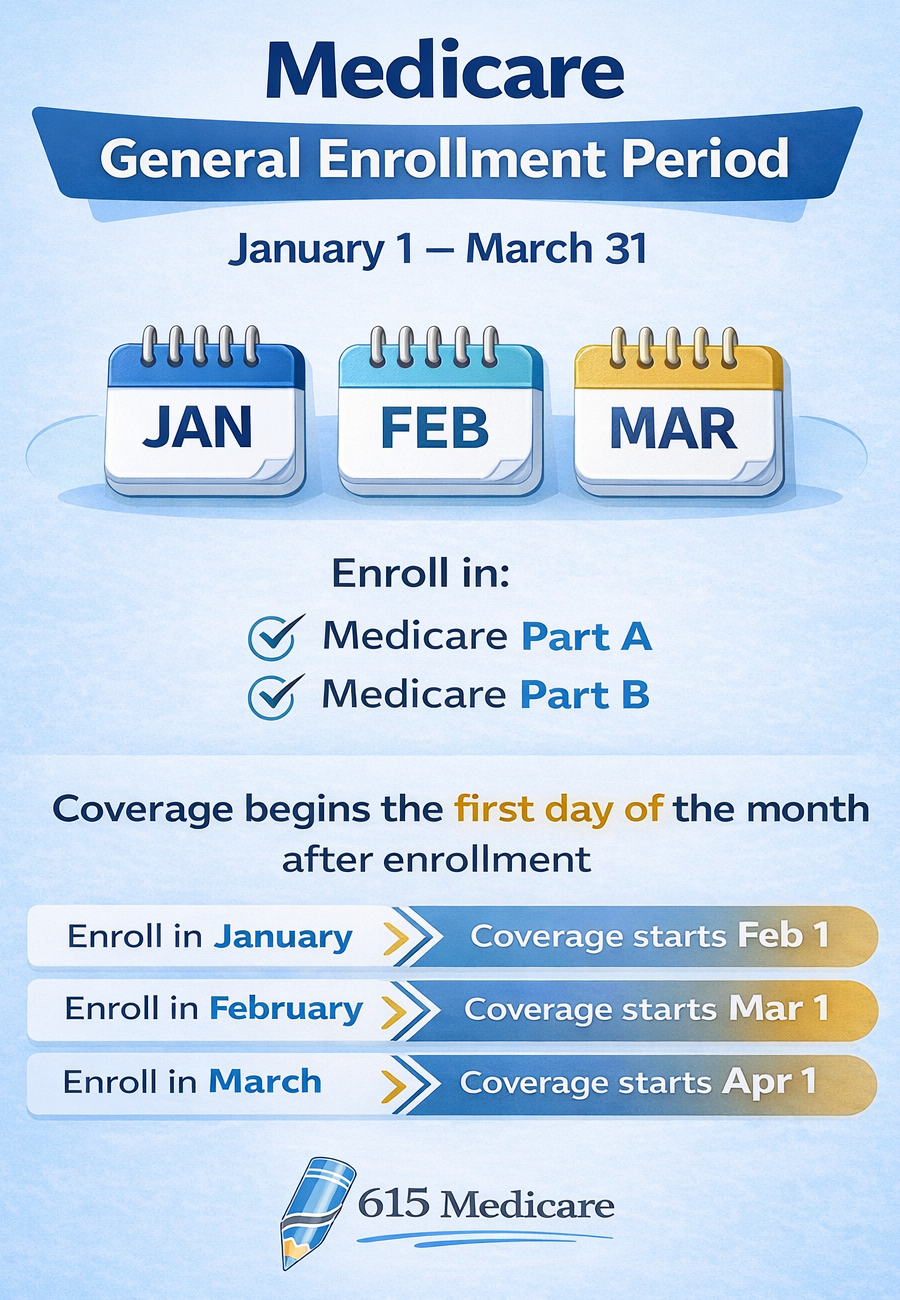
The General Enrollment Period occurs each year from January 1 through March 31.
This enrollment period allows individuals who missed their Initial Enrollment Period to enroll in:
-
Medicare Part A
-
Medicare Part B
However, coverage typically does not begin until the month after enrollment is completed.
Because of this delay, some people may experience a gap in coverage if they miss their Initial Enrollment Period.
Annual Enrollment Period (AEP)
Another important Medicare timeline is the Annual Enrollment Period, also known as AEP.
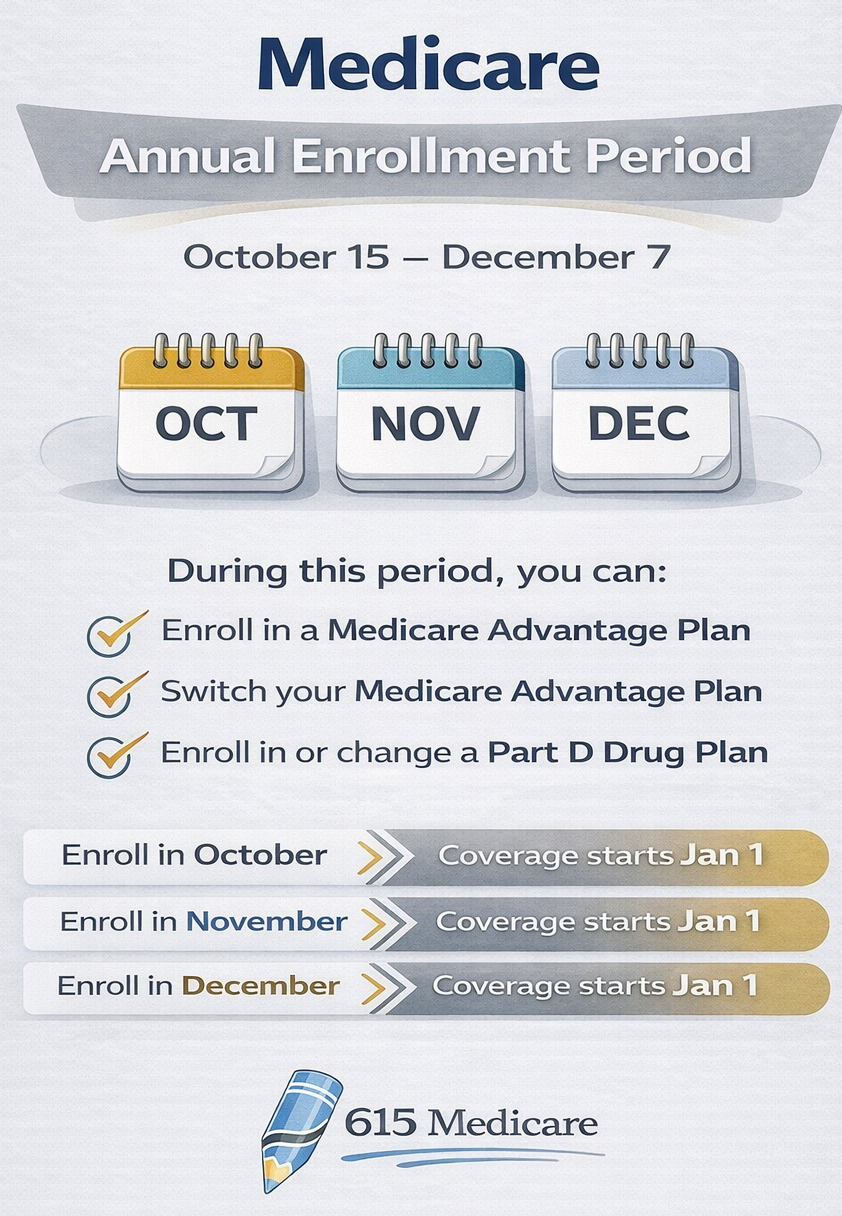
This enrollment period runs from October 15 through December 7 each year.
During the Annual Enrollment Period, individuals with Medicare can:
-
Switch from Original Medicare to a Medicare Advantage plan
-
Switch from Medicare Advantage back to Original Medicare
-
Change Medicare Advantage plans
-
Enroll in, drop, or change Medicare Part D prescription drug plans
Any changes made during AEP typically take effect January 1 of the following year.
Special Enrollment Periods (SEP)
In some situations, individuals may qualify for a Special Enrollment Period.
Special Enrollment Periods allow people to enroll in Medicare or make coverage changes outside of the normal enrollment windows.
For example, you may qualify for a Special Enrollment Period if you:
-
Lose employer health coverage
-
Move outside your current plan’s service area
-
Qualify for certain assistance programs
Eligibility rules for Special Enrollment Periods vary depending on the situation.

What If You Miss Multiple Medicare Enrollment Periods?
Missing more than one Medicare enrollment window can create additional challenges.
For example, you may experience:
-
Delayed Medicare coverage
-
Late enrollment penalties
-
Limited plan options until the next enrollment period
Because of this, it’s important to understand the Medicare timeline and review your options before enrollment deadlines pass.

How to Avoid Missing Medicare Enrollment Deadlines
Planning ahead can help you avoid missing important Medicare enrollment periods.
Here are a few helpful steps:
-
Mark your Initial Enrollment Period on your calendar
-
Review your coverage options before deadlines arrive
-
Ask questions if you are unsure about your eligibility or timeline
Understanding your enrollment window can help ensure that your coverage starts when you need it.

Need Help Understanding Medicare Enrollment Timelines?
Medicare enrollment rules can feel confusing, especially if you are approaching age 65 or recently became eligible for Medicare.
A licensed Medicare professional can help explain enrollment timelines and review the plans available in your area.
If you have questions about Medicare enrollment periods or coverage options, you may benefit from reviewing your situation with someone familiar with Medicare plans.
Request your free Medicare review today.
Get 1-on-1 AssistanceClick Here


Learn More About Medicare
You may also find these Medicare guides helpful:
Follow us on:






IMPORTANT NOTE: This information is for educational purposes only and is not a complete description of benefits. Benefits, premiums, and plan availability may vary by location and plan provider. For more information, visit Medicare.gov or speak with a licensed insurance professionals.