Medicare for Veterans 101: How Medicare Works with VA Benefits
 Medicare for veterans is one of the most commonly misunderstood parts of retirement planning. If you’ve served and use VA healthcare, it’s easy to feel like you already have everything covered. For many veterans, the VA becomes the primary way they access care, and because of that, Medicare can feel like something you may not need to think about right away.
A lot of veterans turn 65 and wonder if Medicare is even necessary. On the surface, that’s a fair question. If you already have VA benefits, adding another layer of coverage might not seem important. This is where things start to get misunderstood. VA healthcare and Medicare are not the same thing, and they do not automatically work together. Understanding how they fit side by side can make a big difference in real-life situations, especially when care happens outside the VA system.
VA Healthcare vs Medicare for Veterans: What’s the Difference?
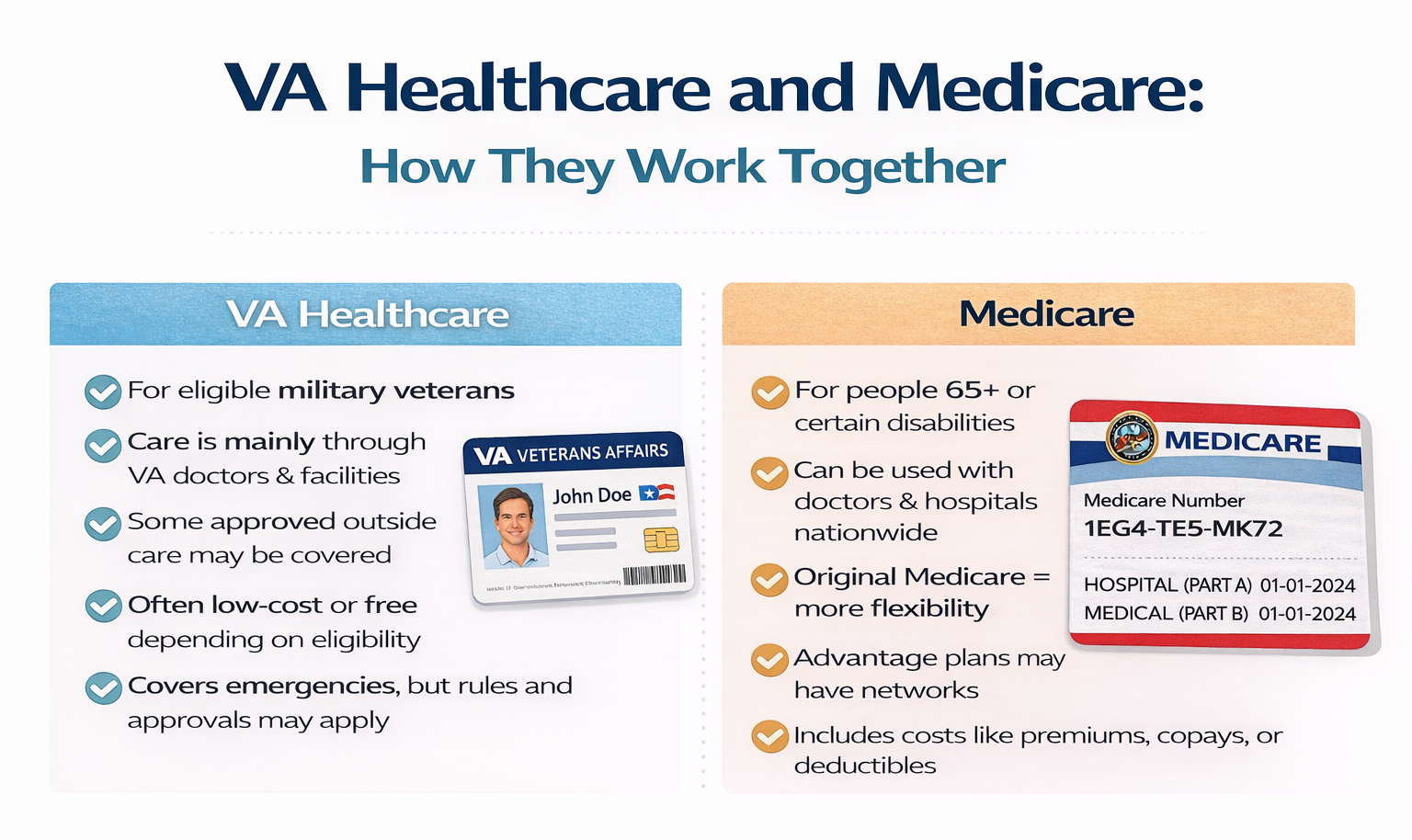
The easiest way to understand this is simple. The VA is a healthcare system. Medicare is health insurance. That difference matters more than most people realize.
VA healthcare centers around VA facilities and approved providers. You typically receive care within that system, and your coverage depends on your eligibility, priority group, and the type of care you need. Medicare works differently. Doctors and hospitals across the country accept it if they participate in Medicare. Instead of being tied to one system, it gives you broader access to care.
There’s also an important detail many people miss:
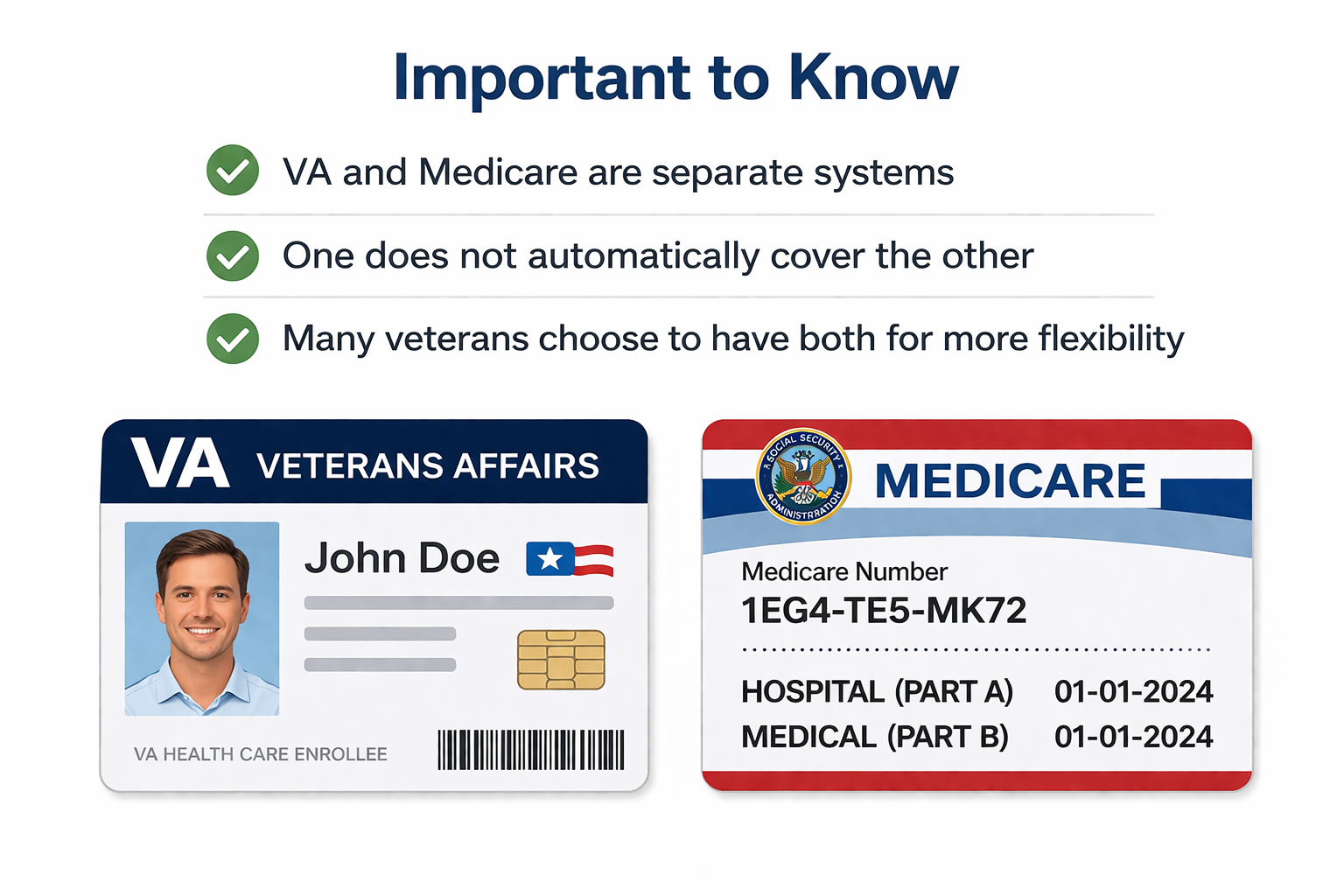
The VA does not coordinate benefits with Medicare.
That means:
- The VA does not bill Medicare
- Medicare does not pay the VA
- Each system works independently
When you use one, the other usually isn’t involved.
What Medicare Covers for Veterans
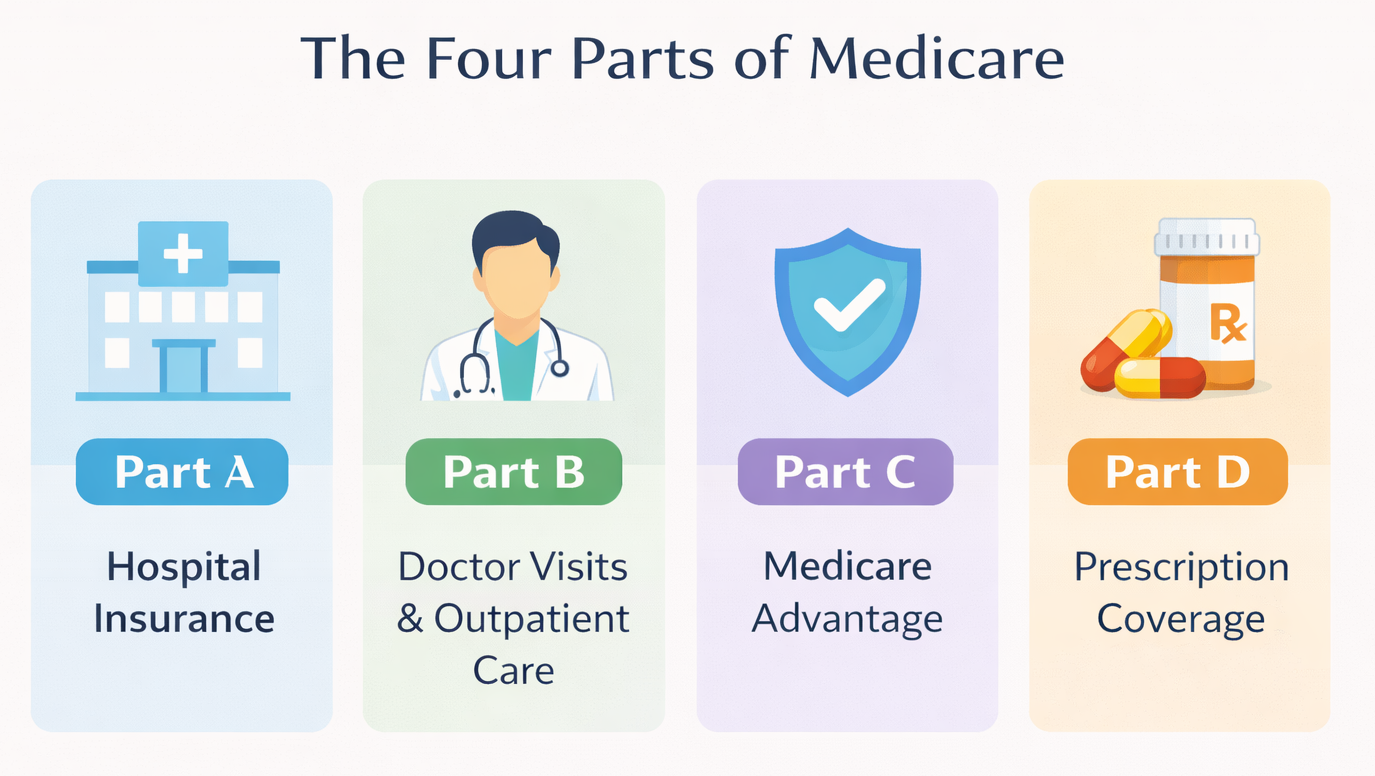
Once you enroll, Medicare works the same for veterans as it does for anyone else. Medicare includes different parts, and each one plays a role. Medicare Part A generally covers hospital care, including inpatient stays and skilled nursing care. Medicare Part B covers outpatient services like doctor visits, preventive care, lab work, and medical equipment. If you choose to add it, Medicare Part D provides prescription drug coverage through private plans. There is also Medicare Part C, which combines hospital and medical coverage into one plan and may include additional benefits depending on the plan you choose.
The key thing to understand is this:
Medicare applies coverage when you use Medicare-approved providers rather than VA facilities.
When Veterans Use VA vs Medicare in Real Life
In real life, many veterans use both systems, just in different ways. Some rely on the VA for routine care, prescriptions, and service-connected conditions. Others use Medicare for local doctors, specialists, or care outside the VA system. It’s not about choosing one or the other. Instead, it’s about understanding when each one applies and how they fit into your daily life. Because the moment you step outside the VA system, Medicare becomes the additional coverage that matters.

What Happens If You Only Have VA Healthcare
Some veterans choose to rely only on VA healthcare, and in certain situations, that can work. However, it is important to understand what that looks like in real life.
- If you receive care outside the VA system without proper authorization, the VA may not cover it.
- If you travel, access to VA facilities may become limited.
- If distance or wait times become a factor, your options may feel more restricted.
- If you delay Medicare enrollment and decide to enroll later, you may also face late enrollment penalties depending on your situation.
None of this means you must enroll in Medicare. It simply means it is important to understand the trade-offs.

Why Many Veterans Choose Medicare Anyway
For many veterans, Medicare is not about replacing the VA. It is about having options. Medicare allows you to see providers outside the VA, access care while traveling, and receive services without relying on VA approval processes. It becomes a backup, and in some cases, an additional layer of flexibility. Over time, that flexibility becomes more valuable.

Medicare Supplement vs Medicare Advantage for Veterans
Once a veteran enrolls in Medicare, the next decision is whether to add additional coverage.
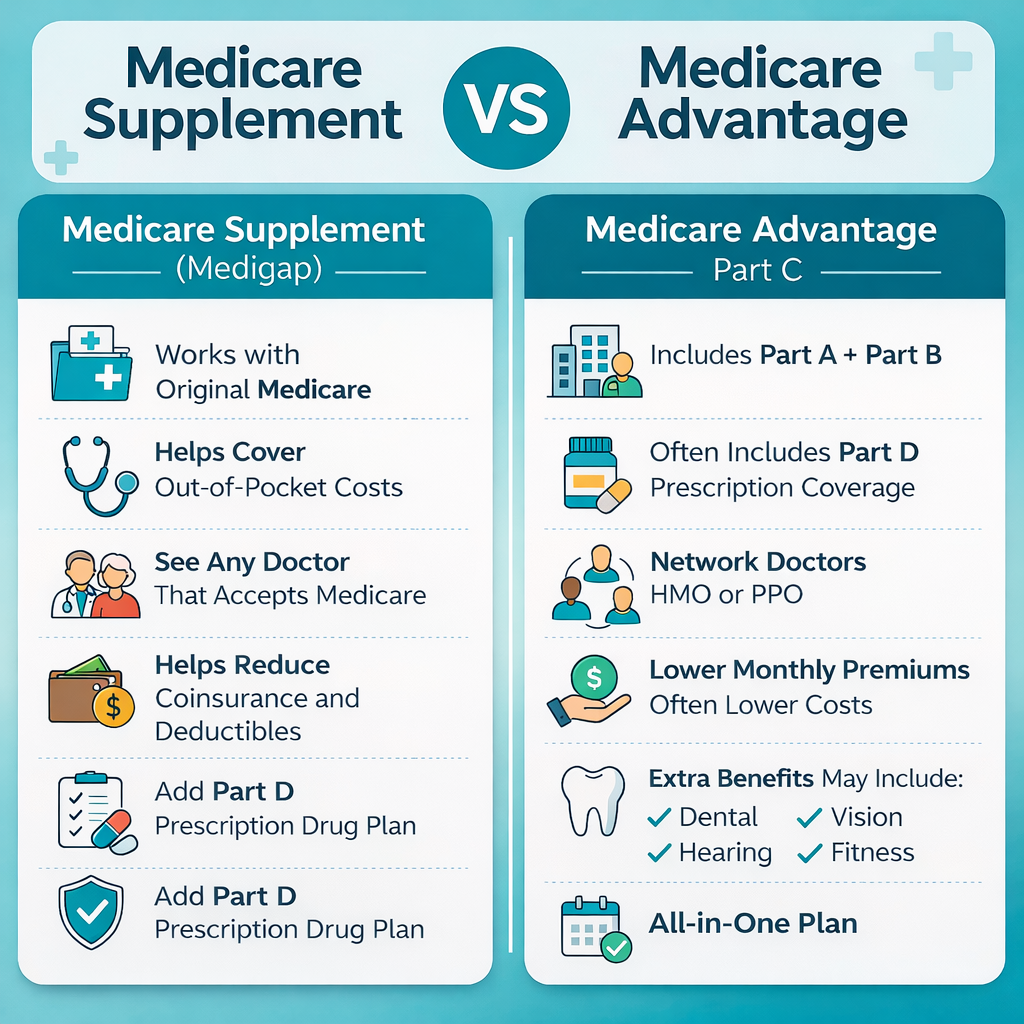
Medicare Supplement plans work alongside Original Medicare and help cover out-of-pocket costs like deductibles and coinsurance. They also allow you to see any provider nationwide who accepts Medicare, which makes them a flexible option.
Medicare Advantage plans are offered by private companies and combine hospital and medical coverage into one plan. Many include additional benefits, but they often use provider networks and may require referrals.
For veterans, the decision often comes down to how Medicare will be used. Some want maximum flexibility as a backup to the VA. Others prefer plans that include extra benefits for everyday use.
Prescription Drug Coverage and VA Benefits
Prescription coverage is another area where veterans often have questions. The VA provides prescription benefits for eligible veterans, and many people are satisfied with how that system works. Because of that, some veterans choose not to enroll in Medicare Part D. In many cases, VA drug coverage is considered creditable coverage, which means you may not face a penalty for delaying enrollment in a Part D plan.

Why Medicare for Veterans Feels So Confusing
The confusion does not come from one system being complicated. It comes from having two systems. Each one has its own rules, structure, and process. They do not automatically connect. Most people do not think about this until they need care outside the VA or run into a situation where coverage works differently than expected. That is when questions start to come up.
Where a Local Medicare Broker Can Help
For many veterans, the most helpful step is not choosing a plan right away. It is understanding how everything works together. Talking with someone local who works with Medicare regularly can help you see how your VA benefits and Medicare options fit side by side. They can walk through real-life scenarios, explain how coverage applies in different situations, and help you think through what makes sense based on how you actually use healthcare. It is not about pressure. It is about clarity.

Final Thoughts on Medicare for Veterans
VA healthcare provides valuable benefits, and for many veterans, it plays a central role in how they receive care. Medicare does not replace that—it works alongside it to provide additional flexibility when you need it. Understanding how these two systems operate, where they overlap, and where gaps can exist helps you make more confident decisions over time. Because the goal is not just to have coverage. The goal is to have coverage that works when you actually need it. Having this allows you to spend more quality time with the ones you love most.

Get 1-on-1 AssistanceClick Here


Learn More About Medicare
You may also find these Medicare guides helpful:
Medigap Frequently Asked Questions
+ Do veterans need Medicare if they already have VA healthcare?
+ What is the main difference between VA healthcare and Medicare?
+ Do VA healthcare and Medicare work together?
+ What happens if a veteran only has VA healthcare?
+ Why do many veterans enroll in Medicare?
+ Can veterans skip Medicare Part D if they use VA prescriptions?
Follow us on:






IMPORTANT NOTE: This information is for educational purposes only and is not a complete description of benefits. Benefits, premiums, and plan availability may vary by location and plan provider. For more information, visit Medicare.gov or speak with a licensed insurance professionals.