Understanding Medicare: A Simple Guide to Medicare Coverage
 If you are getting close to age 65, you have probably started hearing more about Medicare. For many people, understanding Medicare can feel confusing at first.
There are different parts, enrollment periods, and coverage options. For someone just starting to learn about it, that can feel like a lot to take in.
The goal of this guide is simple. It breaks Medicare down in a way that is easy to follow. We will walk through what Medicare is, who qualifies, how enrollment works, and what the main coverage options look like so you can better understand the process.
What Is Medicare?
Medicare is a federal health insurance program designed mainly for people who are 65 and older. It helps cover many common healthcare services such as hospital care, doctor visits, and preventive care.
For many Americans, Medicare becomes the foundation of their healthcare coverage during retirement.
The program has been around for decades and now provides coverage for millions of people across the United States. It helps make healthcare more accessible and manageable as people get older.

Medicare vs Medicaid
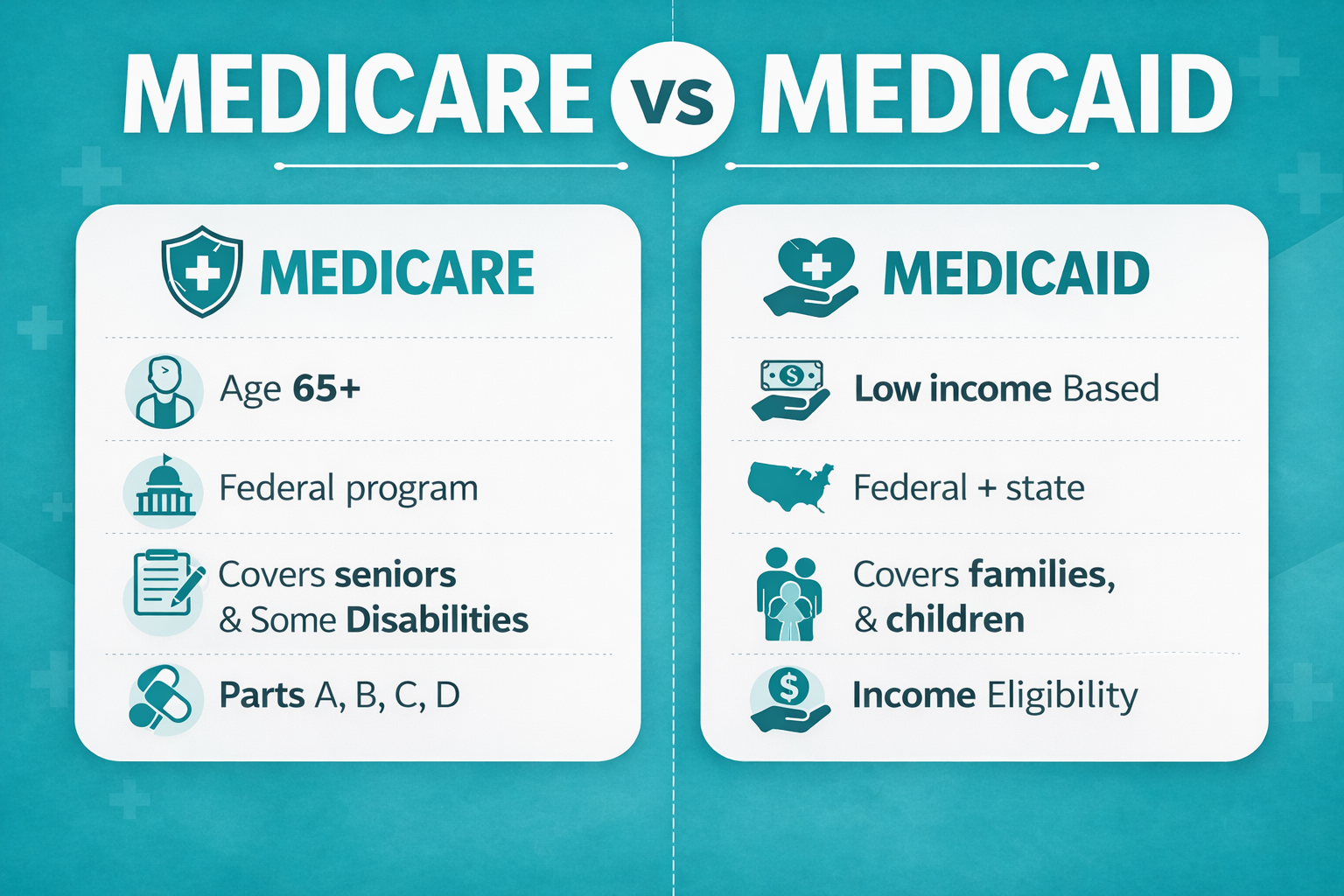
Medicare and Medicaid are often confused because their names sound similar, but they serve different purposes.
Medicare is a federal health insurance program primarily for people age 65 and older, as well as certain individuals with disabilities. Eligibility is generally based on age or disability, not income.
Medicaid is a program run jointly by federal and state governments that provides healthcare coverage for people with lower incomes.
Some people qualify for both programs at the same time. This is often called dual eligibility, and it can help cover more healthcare costs.
When Do You Become Eligible?
Most people become eligible for Medicare when they turn 65 years old.
However, age is not the only way someone can qualify. Individuals who receive Social Security Disability Insurance for a certain period of time may also become eligible for Medicare.
Certain medical conditions may also allow someone to qualify sooner.
Understanding when you qualify is an important first step in planning your Medicare coverage.
How Do You Enroll in Medicare?
There are two main ways people begin their Medicare coverage. These are automatic enrollment and self enrollment.
Automatic Enrollment
If you are already receiving Social Security benefits when you turn 65, you will usually be automatically enrolled in Medicare Part A and Part B.
In most cases, your Medicare card will arrive in the mail a few months before your 65th birthday.
Self Enrollment
If you are not yet receiving Social Security benefits, you will need to sign up for Medicare yourself.
Most people enroll during their Initial Enrollment Period. This is a seven month window that includes:
• The three months before your 65th birthday month
• Your birthday month
• The three months after
Signing up during this period helps avoid delays in coverage and potential late enrollment penalties.⏰
The Different Parts of Medicare
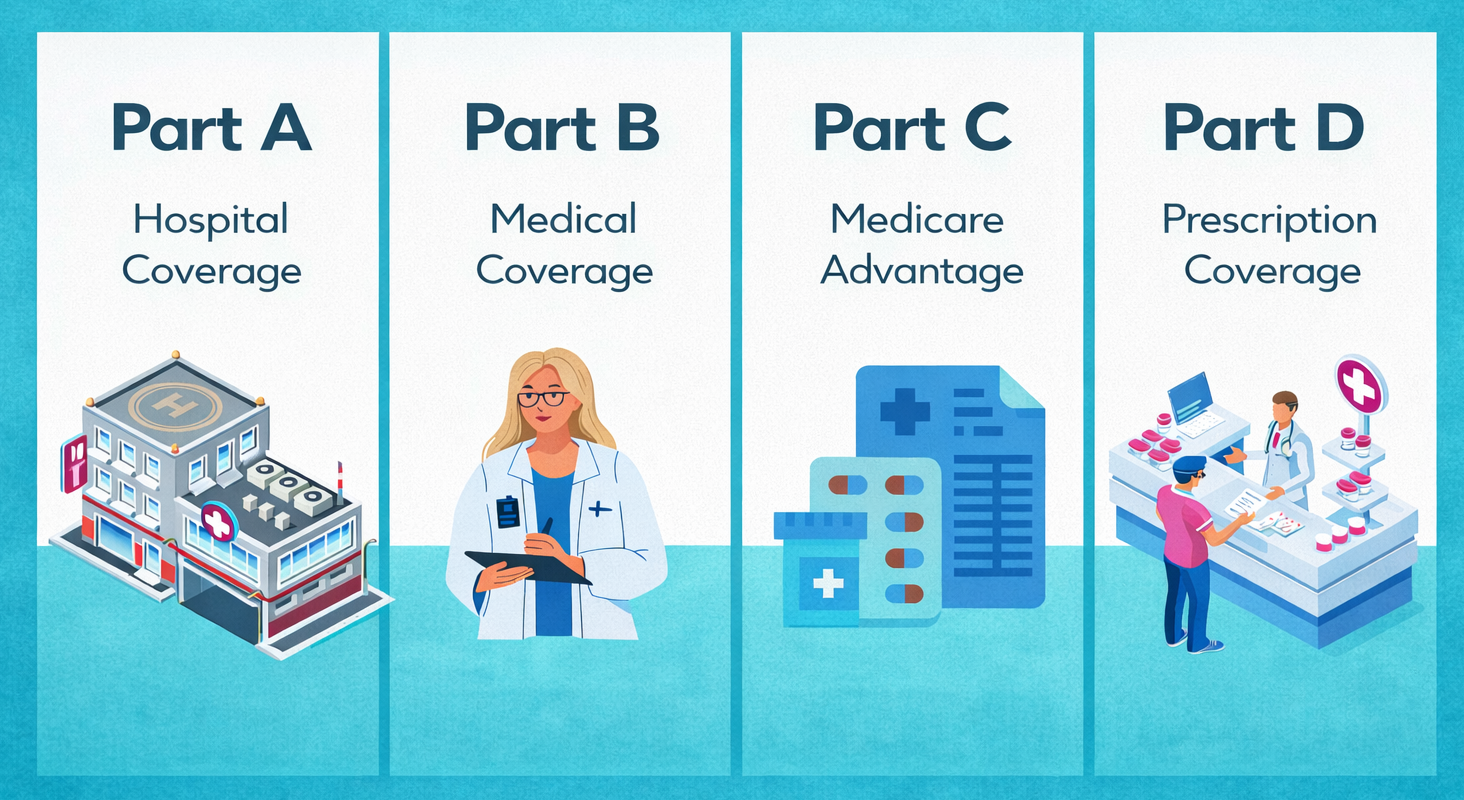
Medicare is divided into several sections called parts. Each part helps cover different types of healthcare services.
Understanding these parts can make the program much easier to navigate.
Medicare Part A🏥
Medicare Part A generally covers hospital care.
This may include inpatient hospital stays, skilled nursing care after a qualifying hospital stay, hospice care, and certain home health services.
Many people do not pay a monthly premium for Part A if they or their spouse paid Medicare taxes while working.
Medicare Part B🧑⚕️
Medicare Part B focuses on outpatient medical services.
This includes doctor visits, preventive screenings, lab work, and certain medical equipment.
Part B helps cover many of the routine medical services people use throughout the year.
Medicare Part C📋
Medicare Advantage, also known as Part C, is another way to receive your Medicare benefits.
These plans are offered by private insurance companies approved by Medicare. They provide the same basic coverage as Original Medicare, but they may also include additional benefits depending on the plan.
Medicare Part D 💊
Medicare Part D provides coverage for prescription medications.
This coverage can be purchased as a separate drug plan alongside Original Medicare, or it may be included as part of a Medicare Advantage plan.
Each plan has its own list of covered medications called a formulary.
How Much Does Medicare Cost?
One of the most common questions people ask is how much Medicare costs.
Medicare helps cover healthcare expenses, but it is not completely free. Like most types of insurance, there are still some costs involved.
Depending on the type of coverage you have, those costs may include:
• Monthly premiums
• Deductibles
• Copayments
• Coinsurance
Some parts of Medicare may not require a monthly premium if you or your spouse paid Medicare taxes while working. Other parts typically have a standard monthly premium.
Even with coverage, you may still pay a portion of the cost when you receive care. For example, you may need to meet a deductible before coverage begins, or you may pay a percentage of the approved cost for certain services.
Because of these out of pocket costs, many people explore additional coverage options to help manage these expenses.

Coverage Gaps in Original Medicare
Original Medicare includes Part A and Part B, but it does not cover every healthcare expense.
Beneficiaries may still have out of pocket costs such as deductibles, copays, and coinsurance. Because of these gaps, many people consider additional coverage that can help reduce these expenses.

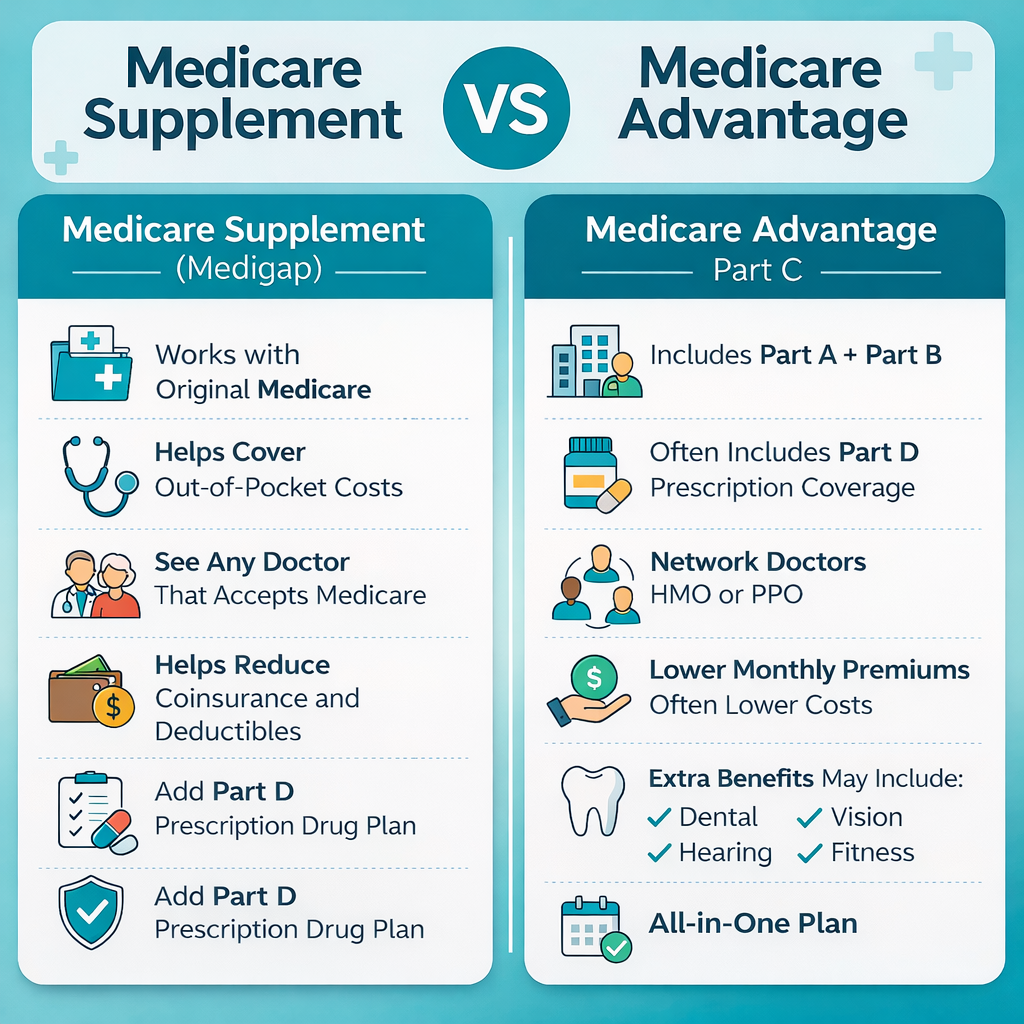
Medigap vs Medicare Advantage
Two common options people consider are Medigap and Medicare Advantage.
Medigap, also called Medicare Supplement Insurance, works alongside Original Medicare and helps cover some of the out of pocket costs left by Parts A and B.
Medicare Advantage is another way to receive your Medicare benefits through a private insurance company approved by Medicare.
These options work differently and cannot be used together, so choosing between them is an important part of the Medicare decision process.
Vision and Dental Coverage
Original Medicare provides limited coverage for routine vision and dental care.
Medicare generally covers vision services only when they relate to medical conditions affecting the eyes.
Original Medicare generally does not cover routine dental services such as cleanings, fillings, or dentures.
Some Medicare Advantage plans may offer additional benefits for vision and dental services.

Getting Help With Medicare
If Medicare feels overwhelming, you are not alone. Many people find the program confusing when they first begin learning about it.
Because of this, some beneficiaries choose to work with licensed insurance agents or brokers who can help explain coverage options and compare plans.
Educational seminars and workshops can also help people better understand their choices.
Taking the time to learn about Medicare can make the process much smoother and help you make more confident decisions about your healthcare coverage.
Get 1-on-1 AssistanceClick Here

615 Medicare wants you to Remember!
For millions of Americans, Medicare plays an important role in managing healthcare costs during retirement.
While the program may seem complicated at first, understanding the basics such as eligibility, enrollment periods, and the different parts of Medicare can make it much easier to navigate.
Starting early and learning about your options can help ensure you choose coverage that fits your healthcare needs and your budget as you move into retirement.
Register for the Free Medicare WorkshopClick Here

Follow us on: